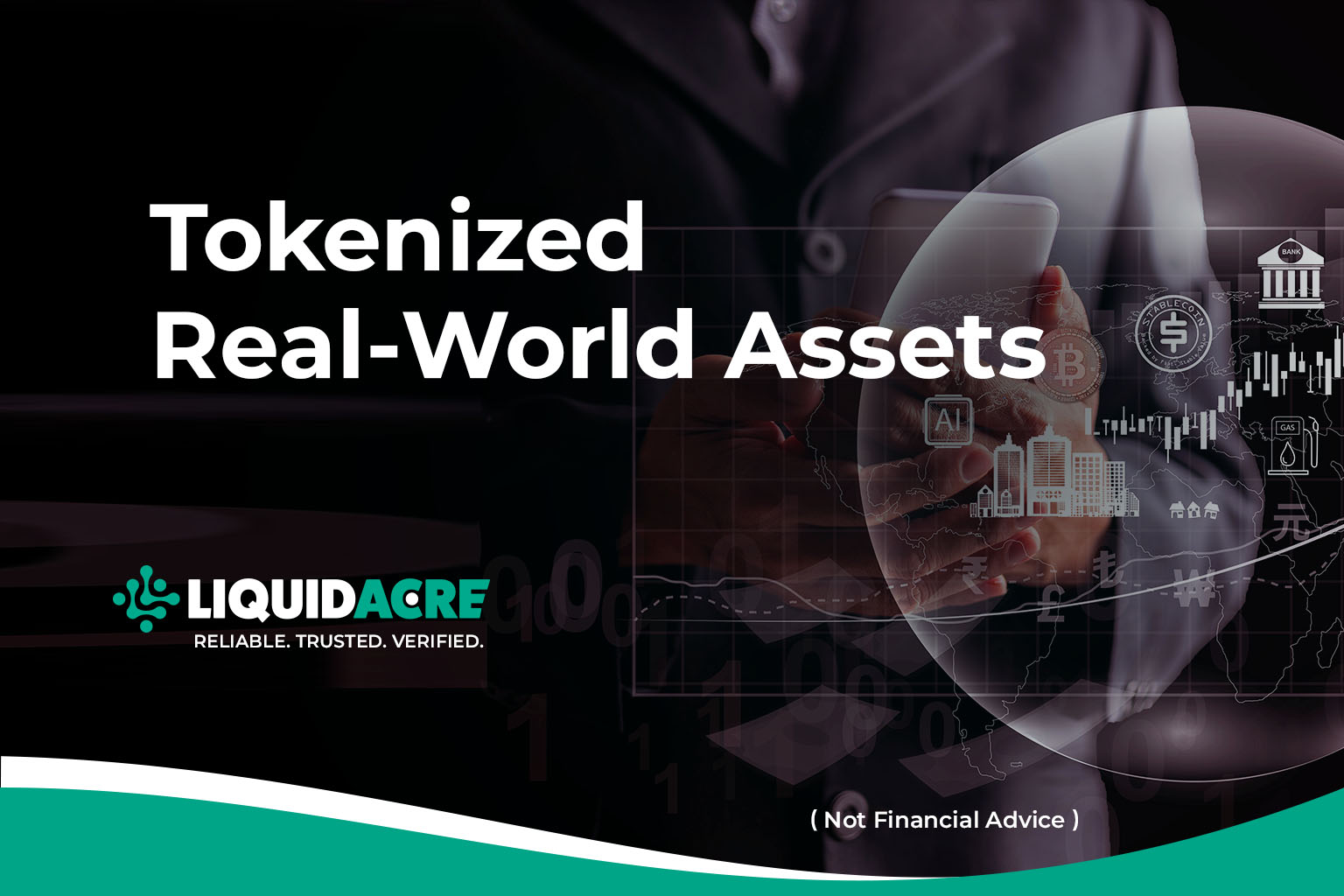
Tokenized Real-World Assets
Why it’s important to choose a secure crypto wallet?
Lorem ipsum dolor sit amet, consectetur adipiscing elit lobortis arcu enim urna adipiscing praesent velit viverra sit semper lorem eu cursus vel hendrerit elementum morbi curabitur etiam nibh justo, lorem aliquet donec sed sit mi dignissim at ante massa mattis.
- Neque sodales ut etiam sit amet nisl purus non tellus orci ac auctor
- Adipiscing elit ut aliquam purus sit amet viverra suspendisse potent i
- Mauris commodo quis imperdiet massa tincidunt nunc pulvinar
- Adipiscing elit ut aliquam purus sit amet viverra suspendisse potenti
How do I know how secure is my wallet?
Vitae congue eu consequat ac felis placerat vestibulum lectus mauris ultrices cursus sit amet dictum sit amet justo donec enim diam porttitor lacus luctus accumsan tortor posuere praesent tristique magna sit amet purus gravida quis blandit turpis.

Are there any other risks I should take account for?
At risus viverra adipiscing at in tellus integer feugiat nisl pretium fusce id velit ut tortor sagittis orci a scelerisque purus semper eget at lectus urna duis convallis. porta nibh venenatis cras sed felis eget neque laoreet suspendisse interdum consectetur libero id faucibus nisl donec pretium vulputate sapien nec sagittis aliquam nunc lobortis mattis aliquam faucibus purus in.
- Neque sodales ut etiam sit amet nisl purus non tellus orci ac auctor
- Adipiscing elit ut aliquam purus sit amet viverra suspendisse potenti
- Mauris commodo quis imperdiet massa tincidunt nunc pulvinar
- Adipiscing elit ut aliquam purus sit amet viverra suspendisse potenti
“Nisi quis eleifend quam adipiscing vitae aliquet bibendum enim facilisis gravida neque velit euismod in pellentesque massa placerat”
Wrapping up: Crypto is a great wallet for you
Eget lorem dolor sed viverra ipsum nunc aliquet bibendum felis donec et odio pellentesque diam volutpat commodo sed egestas aliquam sem fringilla ut morbi tincidunt augue interdum velit euismod eu tincidunt tortor aliquam nulla facilisi aenean sed adipiscing diam donec adipiscing ut lectus arcu bibendum at varius vel pharetra nibh venenatis cras sed felis eget.
Why Wall Street Is Taking Notice…and How Digital Assets Compare with Traditional Investments
“Blockchain may change how we own and trade investments,
but the real value still comes from the assets behind them.”
For years, cryptocurrency enthusiasts have predicted that traditional financial assets like stocks, bonds, real estate, and commodities would eventually move onto blockchain technology. Most people dismissed the idea as another crypto prediction. But something interesting is happening.
In October 2026, Citrini Research, an investment research firm better known for analyzing technology and financial markets than promoting cryptocurrency, published a 79-page report titled Breaking the Wall. (1)
Its conclusion was particularly interesting: blockchain technology may finally be finding its most compelling purpose, not simply creating digital currencies but providing the infrastructure for traditional financial assets.
And that brings us to an important question. If physical assets become digital investments, where does the actual income come from?
First, What Is a Tokenized Real-World Asset (RWA)?
Imagine a $20 million apartment complex with 200 rental units. Traditionally, investing directly in a property like this requires substantial capital or participation through a private investment partnership.
Tokenization offers another possibility. Ownership or economic interests in the property can be represented by digital tokens, potentially allowing eligible investors to participate with smaller amounts of capital.
But here's what matters: The token doesn't create the income. The apartment building does.
So Where Does the Yield Come From?
Tenants pay rent. The property pays operating expenses, insurance, taxes, maintenance, debt obligations, and reserves. The remaining cash flow may be distributed to investors according to their ownership agreements.
Warehouses generate income through leases. Hotels earn revenue from guests. Infrastructure projects may receive contracted payments. The common denominator? Real assets generating real economic activity.
How Does This Compare with Traditional Investments?
Consider three familiar alternatives. Bonds generally provide contractual interest payments from governments or corporations, subject to credit and other risks. Real Estate Investment Trusts (REITs) provide exposure to income-producing properties, with distributions dependent on performance and financial policies. Tokenized Real-World Assets may provide economic interests in individual properties, loans, or portfolios, with potential distributions tied to their underlying performance. The difference isn't necessarily how income is generated. It's how the investment is structured, administered, accessed, and potentially transferred.
Why Is Wall Street Paying Attention?
Citrini's observation highlights an important shift. For more than a decade, blockchain developers built infrastructure for transferring value digitally. Now traditional financial assets are beginning to use that infrastructure. Potential benefits include more efficient settlement, improved ownership records, automated administration, and broader access to appropriately structured investments. However, tokenization doesn't guarantee profitability, liquidity, or protection from market losses.
Conclusion: Technology Changes the Delivery, Not the Fundamentals
We’ve learned that sustainable profitability comes from sound business fundamentals, not financial engineering.
Revenue must be earned. Expenses must be controlled. Assets must be managed effectively. Blockchain technology may transform how investors participate in traditional financial markets. But whether we're talking about bonds, REITs, or tokenized real estate, the fundamental question remains the same: What economic activity is producing the return, and is that income sustainable? Because ultimately, technology like LiquidAcre will change how we own the asset. It doesn't change what makes the asset valuable.
(1) Source: Citrini Research, Breaking the Wall (October 2026), as discussed in CoinDesk, October 8, 2026.